
Notes on Springsteen, social construction, and the reality we inhabit without noticing
I published something on Substack yesterday. An editor of a conscious living neuroscience newsletter read it and liked it. That meant something to me—not because of the validation, but because of the source. Someone whose daily work is the study of perception, of the brain’s construction of the world, paused to engage with a piece about the construction of meaning.
I have been mulling something since then. Something I want to try on for size, and maybe try on with you.
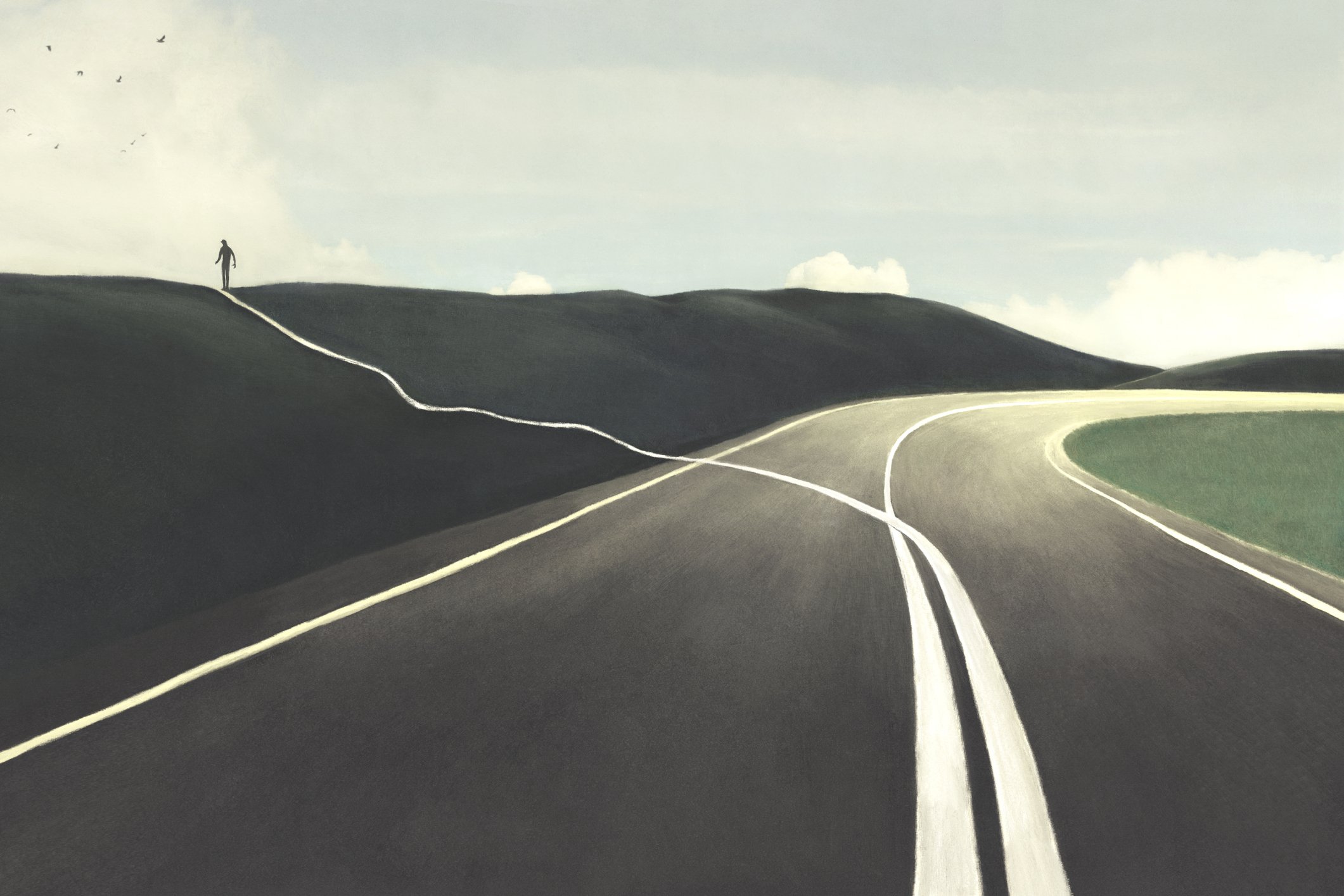
I am thinking about the idea of reality as a social construction. Not the glib, sophomoric version—the one that says “everything is fake, nothing is real.” That is boring and false. I am thinking about the more honest and unsettling version: that we inhabit constructions so thoroughly that we mistake them for the world itself.
We do this with money. A hundred-dollar bill is a piece of cotton-linen with green ink. Its value has no empirical basis—you cannot dissect it and find “one hundred dollars” of anything. Yet we treat it as a store of value, a unit of account, a medium of exchange. We experience prices, wages, and debts as objective facts, not as shared fictions. If the consensus collapses, the “reality” evaporates overnight.
We do this with time. “2:00 PM” and “2026” are not features of the universe. The earth rotates; it orbits. But our division of that motion into hours, minutes, and years—and the meaning we assign to midnight or New Year’s Day—are purely symbolic coordinations. They are real in their consequences. Trains run. Contracts expire. Birthdays are celebrated. But they have no empirical referent outside human convention.
We do this with borders. Walk across the 49th parallel between the U.S. and Canada. The soil, the trees, the air do not change. There is no empirical “border” in nature. Yet that invisible line, sustained entirely by maps, treaties, flags, and passports, determines your legal identity, your tax obligations, your language of schooling, and whether you can cross freely.
These are all social constructions. They are real in their effects, but they are not given. They are made.
Now, I am a theologian by training. So I want to say something that might make some readers uncomfortable: I understand God to be an idea that has no basis in empirical fact—for which there is no empirical evidence—but which is given substance and meaning through being shared symbolically by a vast number of humans over millennia.
That is not a cynical statement. It is a descriptive one. And I think it becomes more intelligible—and less controversial—if we look at other, less sensitive examples of the same phenomenon.
So I have been looking for an example that can raise awareness of this phenomenon without triggering the defenses that the word “God” inevitably triggers. I have been looking for something that can change the angle of perception just a degree or two.
I have been looking at Bruce Springsteen.
I know. It sounds like a non sequitur. Stay with me.
Springsteen does not go in for blatant theatricality. No face paint. No pyrotechnics. No sci-fi concept albums. He wears a t-shirt. He tells stories about his dad. He sweats like a longshoreman. He is, in a sense, the reality TV of rock and roll—not scripted, not “put on,” just a guy from New Jersey pouring his heart out.
And yet—and this is the crucial turn—that very lack of theatricality is itself a theatrical choice. It is the most sophisticated kind of performance: the performance of non-performance. Springsteen convinces you that there is no script at all, that you are just watching a regular guy from New Jersey. But that “regular guy” is a meticulously crafted persona, refined over fifty years. The t-shirt is a costume. The storytelling is a liturgy. The sweat is a sign of grace descending.
The most powerful social constructions are the ones that convince you they are not constructed at all.
Think about what Springsteen has built.
He has built an iconography: the denim jacket, the bandana, the Fender Telecaster, the dusty boots, the ‘57 Chevy, the boardwalk, the carnival lights, the highway at night. These are not just “props.” They are sacramental objects. They carry weight. When Springsteen puts on that ragged bandana, he is not accessorizing; he is vesting for a ritual.
He has built a canon: a cycle of sacred texts. Born to Run is the creation myth. Darkness on the Edge of Town is the fall and the struggle. The River is the long, weary middle—marriage, work, disappointment. Nebraska is the psalter of the damned. Born in the U.S.A. is the prophet’s angry jeremiad. The Rising is the book of lamentation and resurrection. Fans do not merely “like” these albums. They argue about their theological ordering. Which is the truest? Which one saves? That is the language of scripture, not entertainment.
He has built a ritual: the concert. It lasts three to four hours—a deliberate excess that mimics the duration of a profound religious experience. He sweats. He preaches. He introduces the band with litanies of praise. He takes requests from the congregation. The crowd knows every word, every shout, every harmonica cue. A fifteen-minute version of “Jungleland” is not a song; it is a descent and an ascension. The ritual concludes not with a bow, but with a final, exhausted, grateful collapse.
And he has built an afterlife. Springsteen’s constructed reality is not frozen in amber. It is ongoing, iterative, and aging with us. He writes about young people running down the highway, but he is now in his seventies. So he has done something remarkable: he has let his constructed reality age gracefully. Western Stars and Letter to You are not about youthful escape; they are about looking back, reckoning, mortality. He has allowed his fans to grow old inside his world. That is a profound theological move—a god who ages with his congregation.
I am always amazed at the power Springsteen has to pull so many people into his E Street reality. He is like a cultural whirlpool.
A whirlpool does not announce itself. It does not wave flags or sound trumpets. It simply draws you in through a gentle, irresistible curvature of the water. You don’t jump into a whirlpool; you look at it, you feel a pull, you step a little closer, and suddenly you are in it, circling with everyone else, unable to tell where the current ends and your own movement begins.
Springsteen draws you in with the specific, not the universal. He sings about a particular highway, a particular boardwalk, a particular girl. But in their particularity, they become your highway, your girl, your town. He does not say, “This is everyone’s story.” He says, “This is my story”—and in the intimacy of that claim, you recognize it as yours.
He makes you a participant, not an observer. At a Springsteen show, he points at people in the crowd. He pulls them on stage. He takes requests. He doesn’t just perform at you; he performs with you. When he says, “Is anybody alive out there?” and twenty thousand people roar back, you are not cheering for him—you are cheering witheach other, confirming that you are all inside the same swirling current.
He creates a shared memory bank that predates you. When he plays “Tenth Avenue Freeze-Out” and stops mid-song to say, “Clarence,” and the crowd roars in recognition of the late, great Big Man—you are not just hearing a song. You are being initiated into a collective grief and a collective gratitude that thousands of people have felt together for decades. The whirlpool was spinning before you arrived; it will spin after you leave.
Now, here is the move that Springsteen helps us make.
Most people think of “social construction” as something false that we need to see through—like a veil to be torn. But Springsteen’s constructed reality is not false. It is true in its effects. The community is real. The catharsis is real. The moral compass he offers—the dignity of work, the ache of restlessness, the redemptive power of friendship—is real in the lives of his fans.
So the question is not whether it is constructed. The question is: What does it take to construct a reality that is worthy of our devotion?
And if Springsteen can do it with a t-shirt, a Telecaster, and a story about a broken-down car—if he can pull millions into his whirlpool without a single spaceship or explosion—then what does that say about all our shared realities?
What does it say about nations? What does it say about justice? What does it say about God?
Here is my proposal.
We are all standing in a room. The room was built by our ancestors, our artists, our neighbors, and ourselves. We did not notice we were building it; we thought we were just living. The walls are made of stories, the windows of songs, the floor of shared memories. Springsteen walks in, sits down, and starts telling a story about a highway and a girl and a promise. And suddenly the room feels warmer. We turn to each other and say, “Yes. This is real.”
And it is. It is as real as anything gets.
The only question—the only question that might change everything—is this: Who else is in the room? What stories are we not telling, that we could tell, if we knew we are the ones who built the room—and if we had the courage to remember that the walls are not made of stone, but of decisions made long ago by people not so different from us?
That is the one-degree shift I am looking for. Not cynicism. Not debunking. Just a gentle, awed awareness that we are in the room, and we were already in the room, and we could—if we dared—remember that we are the ones who built it.
And if we remembered that, we might ask: What kind of room do we want to live in? Not tomorrow. Not after the revolution. But now, together, with the walls we have and the stories we tell.
Springsteen gives us a room. It is a good room. It is warm and true and full of grace.
But it is not the only room.
And WE are the ones who built it.
Thank you for reading. If this stirred something in you—a memory, a question, a disagreement—I would love to hear it. The room is bigger when we talk about it together.